Hay Shortage: How to Make Your Forage Supplies go Further
Contents
- Hay Prices and the Changing UK Climate
- Weigh Out, Don’t Guess
- Slow Down Intake
- Hay Alternatives for Horses
- Reduce Waste
- Correct Storage
- Treat Each Horse as an Individual
- Plan Ahead
- Ensure a Balanced Diet
Hay Prices and the Changing UK Climate
As we move through winter and start looking forwards to spring, owners continue to experience issues with the hay shortage and rising hay prices. Data from the British Hay and Straw Merchants’ Association, shared by the Agriculture and Horticulture Development Board, show hay prices per tonne for big square bales averaged £151 during the week ending 8th February 2026, reflecting a £78 increase compared to the same week in 2025.
To complicate matters further, MET office data shows England has had a significantly wetter winter than previous years, already exceeding its entire average winter rainfall, standing at 111% of the season's typical total, as of 8th February. This has left many horse owners with muddy paddocks and minimal grass, relying solely on hay, haylage, and forage replacers.
With that in mind, it is important that all horses still consume enough forage to meet their physiological and psychological needs. Here are our top tips to help manage your hay supplies during the shortage, without compromising horse health.
Weigh Out, Don’t Guess
We are often asked how much hay to feed a horse. All horses require a minimum of 1.5% body weight in forage daily on a dry matter basis. Once you account for the moisture content of hay, this is roughly 8.5kg of hay per day for a 500kg horse. In reality, many horses will require more than this to maintain condition, often consuming 2-2.5% body weight daily depending on appetite.
Using a hay scale or spring balance ensures you feed the correct amount for your horse’s size and workload but also allows you to calculate more accurately how long your hay supply will last. It is important to weigh how much your horse is actually eating, not just what they are offered, as some horses do not voluntarily eat enough hay and will need topping up with hay replacers.
Slow Down Intake
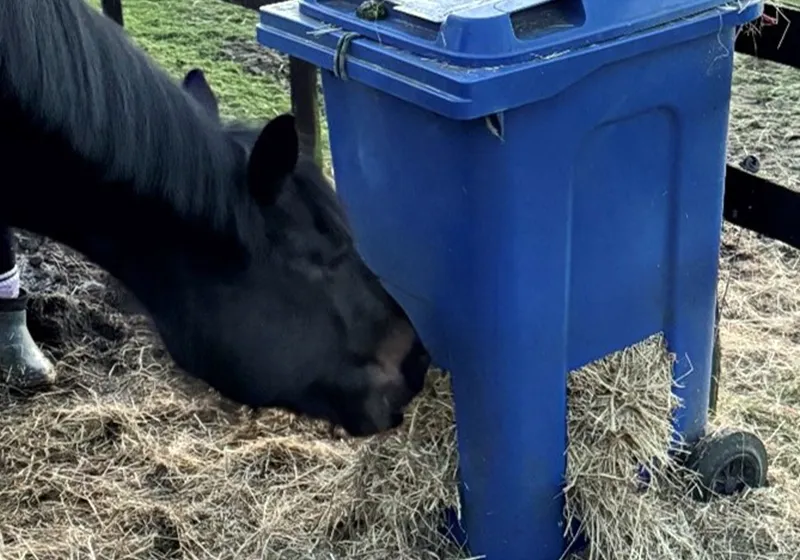
Horses are designed to trickle feed, eating little and often throughout the day. However, some horses will gorge their hay in a short period, leading to unwanted weight gain, or long gaps with no forage available. Using slow feeders for horses in the stable or field can encourage a steadier intake of hay. Small-holed nets, double netting, multiple nets around the stable, hay balls, or hay boxes are all effective ways to slow consumption and reduce hay waste. If your routine allows, offering smaller portions of hay at intervals throughout the day also helps to mimic natural grazing behaviour and makes hay supplies last longer.
Hay Alternatives for Horses
For good-doers that require a low-calorie intake, more mature, stemmy hays typically have a lower energy content and are better suited. With limited options for purchasing hay during the current hay shortage, many owners are making the best of whatever hay is available. Consider soaking hay for at least one hour to reduce the calorie content or replace some hay with a low-calorie chaff if needed. For hardy types, up to 50% of the daily forage intake can be replaced by an oat straw, to help stretch hay supplies. Oat straw is high in fibre and low in calories but should always be introduced gradually and avoided for horses prone to impaction or those with poor dentition.
For poor-doers who would benefit from high quality ad-lib hay but don’t have the supply to facilitate this, partial hay replacers such as beet pulp, alfalfa chaff, soaked grass pellets, Re-Covery Mash®, or Super Fibre Cubes can be used. These can be offered in multiple small buckets in a “buffet style” to encourage natural grazing behaviours or combined in a larger bucket for your horse to pick at throughout the day. Including a chopped fibre source helps to increase chewing and saliva production, supporting digestive health. 1kg of hay replacer is considered equal to 1kg of hay, so ensure you are topping up with enough to meet daily forage requirements.
Reduce Waste
A significant amount of hay can be wasted through trampling and contamination. While hay nets and raised troughs help reduce waste, keeping the feeding area clean and tidy is just as important. Rubber mats or designated feeding corners keep hay cleaner than throwing it directly onto bedding or mud. Removing spoiled or trampled hay regularly prevents horses from rejecting fresh hay and reduces waste.
Correct Storage
The last thing needed during a hay shortage is for your supply of hay to become unusable. Keep bales covered, dry, and well-ventilated to prevent spoilage. Good storage means less wastage over the season and better hygienic quality. If horses are reluctant to eat their hay, steaming can improve hygiene and encourage intake. Hiding some Super Fibre Cubes within the hay can also spark interest and encourage natural browsing behaviours.
Treat Each Horse as an Individual
When determining how best to provide enough forage during a hay shortage, it is essential to consider the horse’s individual needs. Factors such as current body condition, workload, medical history, and dental health all influence what and how much a horse should eat. Appetite plays a key role too, so selecting fibre sources your horse will happily consume is vital. This often takes some trial and error but helps to reduce waste and support your horse’s health in the long run.
Plan Ahead
There are plenty of options available for feeding horses when hay is limited. However, the more consistent the diet the better, so understanding how long your hay supply will last and giving your hay supplier enough warning for your next order is key. Discuss with your supplier the amount of hay you are getting in weight, rather than just the number of bales, to get a more accurate idea of what you are buying.
Ensure a Balanced Diet
Forage alone often does not meet all a horse’s nutrient requirements, so it is essential that the recommended feeding rates of a balancer or fully fortified feed are provided alongside forage. With the UK climate getting warmer and wetter, nutrient levels in hay and haylage are becoming more variable. Recent hay analysis has shown more frequent cases of forage with lower digestibility and lower mineral levels than expected. As a result, it is more important than ever to provide horses with a balanced diet to support long-term health, performance and longevity.
Need Guidance?
If you would like any further information on feeding your horse or pony please feel free to contact our nutritional team on +44 (0)1622 718 487, email info@saracenhorsefeeds.co.uk or fill out our Feed Advice Form.