From Racehorse to Riding Horse: Getting Started with Retraining
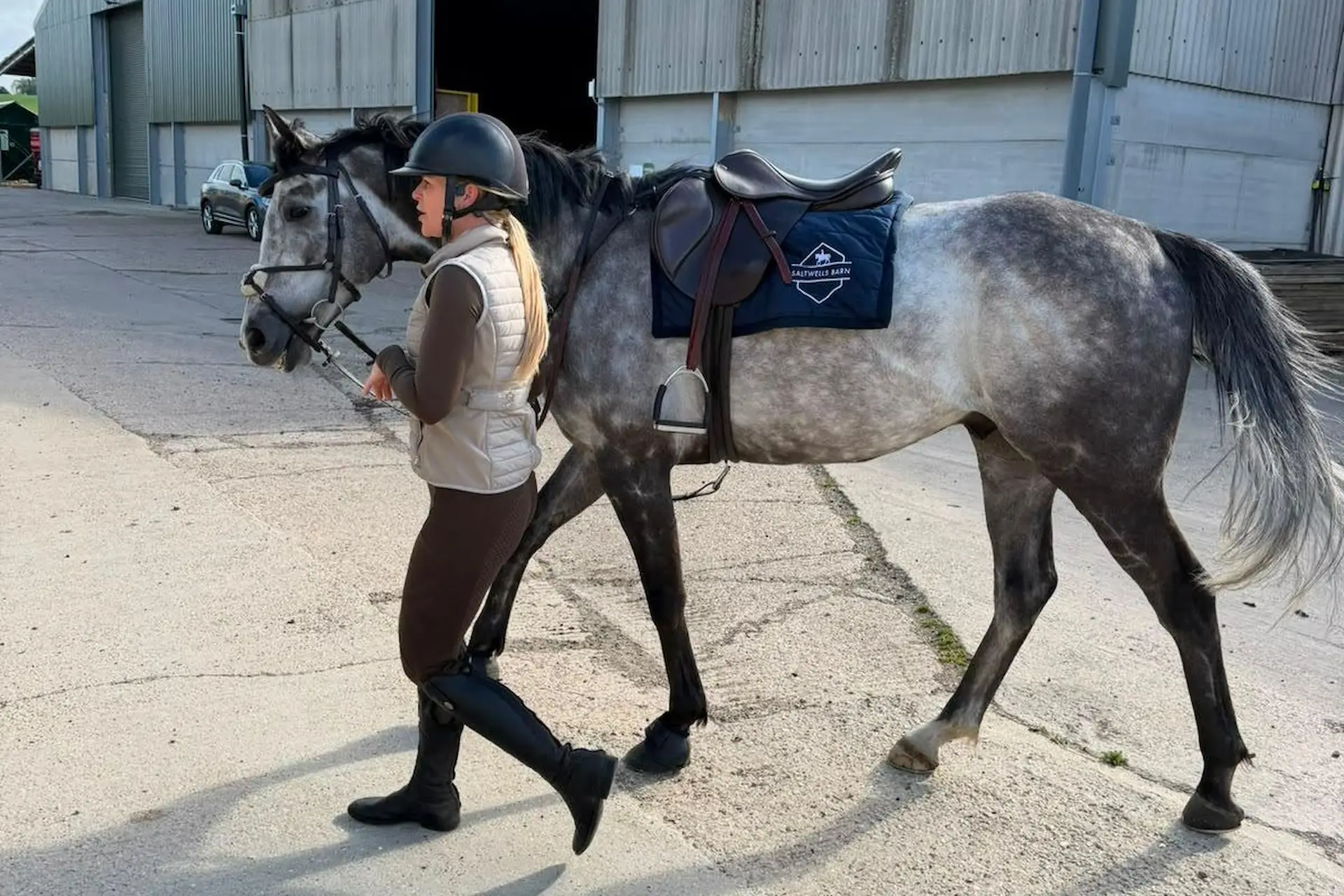
For a Thoroughbred, life after racing can look very different from the career they were bred and trained for. Whether they are destined for a new competitive discipline, or a quieter leisure career, transitioning from racing requires time, patience and an understanding of how different their new role may be.
Bringing an ex-racehorse into a new career is one of the most rewarding journeys an owner can take. Whether your Thoroughbred has retired sound from racing or is recovering from an injury, successful retraining is about far more than simply changing disciplines. Every horse has a different history, strengths and challenges. For this reason, there is no one size fits all approach. Each rehabilitation and retraining programme should be designed around the individual horse, helping them recover physically while preparing their body and mind for life beyond the racetrack (Hockenhull, Cardwell and Verheyen, 2024).
We asked the team at Saltwells Barn, a 5* rehabilitation yard in Cambridgeshire, to answer some of the most common questions about getting an ex-racehorse started in their new career.
What is the difference between rehabilitation and retraining?
Rehabilitation is the process of restoring a horse to physical fitness, for example recovering from an injury. Rehabilitation involves returning the horse to soundness and allowing them to begin a new career.
Retraining is the process of teaching former racehorses a new way of being ridden to make them suitable for a range of new careers, including understanding different aids. Racehorses undergo a process mentally and physically of relearning how to respond to a rider's aids and how to work correctly in their new bodies.
How do you assess a horse when it first arrives?
If a horse is coming to us with an injury. Many arrive with a diagnosis and rehabilitation programme already established by their veterinary surgeon. In those cases, our role is to carefully implement that plan, whether that's controlled exercise, physiotherapy or box rest.
If a horse arrives without a confirmed diagnosis or injury free, we begin by gathering as much information as possible from the trainer. Understanding how the horse performed at peak fitness, what changes have occurred, what have they done already and what they think the horse might do is invaluable.
We then work closely with our veterinary surgeon, farrier, nutritionist and physiotherapist to assess the horse and build an appropriate programme. There might be medical intervention or investigation, we might come up with a plan to start working on areas and then assess after a period of time, we might decide on occasion that we can’t help or in other cases that the horse probably doesn’t need us.
Areas to identify when assessing the horse:
- Conformation
- Musculoskeletalhealth
- Temperament
- Dentalchecks
- Farrierchecks
- Veterinaryexaminations
These factors can underpin potential suitability for different equestrian disciplines.
No two horses follow exactly the same path, and that's one of the most important principles of rehabilitation/retraining. Every programme is tailored to the individual horse.
I think the most important part of our assessment process when a horse comes in, is the professionals that we work with. The more information, experience and professional opinions, the more likely we will be able to provide the most successful rehab we can.
Should ex-racehorses have a break before retraining?
Where possible, yes. If a Thoroughbred comes directly out of training, we prefer them to enjoy around three months turned away before beginning their new career.
This allows the muscles developed specifically for racing to relax and gives the horse time to unwind mentally after life in training. It’s amazing how quickly this happens!
When they’re brought in, we’re basically working with a blank canvas and we can begin developing the muscle groups needed for balance, self-carriage and strength in their new discipline, particularly through the hindquarters and core.
This usually takes a few months to start seeing a change andwe might be happy after 5 or 6 months for them to go to a new home but equally, they need to be continued further in their strength and training and I really don’t think you can say a horse has built a really strong foundation within a year.
Does age affect retraining?
Absolutely.
Younger Thoroughbreds often tire mentally before they tire physically. They are processing huge amounts of new information, so regular breaks are important to prevent them becoming overwhelmed.
There is also the consideration that very young horses who are 2 or 3 years old may have some additional development to do and therefore we like to take a much slower approach and regularly decide to give them week or even month-long breaks.
Older horses often tell you more through their movement. Watching how they feel physically allows us to adapt their programme accordingly.
How long does rehabilitation or retraining usually take?
There isn't a one-size-fits-all answer. How long is a piece of string?
I’d be surprised if a horse was with us for less than six weeks and surprised if they were with us for more than six months (not including those that stay to be turned away). Every horse is different and every expectation of where a horse needs to be is different. The timescale depends on the injury itself, how the individual horse responds, and ultimately what they're being rehabilitated or retrained to do.
Preparing a horse for a comfortable retirement requires a very different approach from preparing one to return to racing or transition into another competitive career for example.
Meet the experts
Saltwells Barn is a 5* rehabilitation yard in the heart of Cambridgeshire. They specialise in box rest, rehabilitation and managed turnout through their exceptional state of the art care. Their services provide horses with a safe and stress-free environment to support healing and overall wellbeing. With qualified staff on hand around the clock, each horse receives expert care, regular monitoring and plenty of attention to help them in their journey. Every plan is tailored to each horse’s specific needs, ensuring gradual and effective recovery from box rest to full ridden work and everything in between.
Need Guidance?
If you would like any further information on feeding your horse or pony please feel free to contact our nutritional team on +44 (0)1622 718 487, email info@saracenhorsefeeds.co.uk or fill out our Feed Advice Form.