Supporting your horses topline
.jpg)
Supporting your horses topline.
A common feeding query for many horse owners is feeling that their horse could do with more muscle when assessing their horse’s condition. So, what can cause poor muscle development or loss of muscle condition? Furthermore, what can we do to support muscle strength and development through different management strategies?
Poor muscle condition in horses can be influenced by a variety of factors including:
- Inadequate Nutrition
- Poorly fitting tack
- Exercise and workload
- Inadequate recovery periods
- Hydration and Electrolytes
- Age
- Body Condition
- Underlying health conditions
When assessing a horse’s muscle condition, it is important to consider these factors together, as one can influence another. For example, inadequate nutrition may limit a horse’s ability to recover from exercise, while pian or poorly fitting tack may affect movement and the development of certain muscle groups.
Exercise and Recovery
Appropriate exercise, tailored to the horses fitness and ability is essential for developing strength and supporting muscle condition. Varying the type of exercise can help target different muscle groups and improve balance, proprioception and overall athletic ability. For example, correctly performed lateral work can help develop muscular strength, core and hindlimb engagement and balance, whilst hacking over varied terrain and utilising hill work can help develop proprioception and muscular strength. Exercise should be progressive and appropriate for the individual horse, with attention to maintaining correct way of going and addressing any underlying discomfort or asymmetry.
A horse’s work program should also incorporate adequate recovery time to allow the body to adapt to training. During recovery, muscle tissue repairs and adapts to exercise, whilst energy stores, including muscle glycogen are replenished. The amount of rest required will depend on the intensity of the exercise, the horse’s fitness and individual needs.
Nutrition’s Role
Muscle development and recovery rely on an appropriate exercise program alongside a balanced diet that provides sufficient energy, protein and essential nutrients.
Good quality protein provides the building blocks for muscle development, health and recovery. For protein to be utilised by the horse it is hydrolysed into amino acids in the small intestine. These amino acids support muscle protein synthesis, tissue repair and cellular function. Individual amino acids perform different roles in the body and a well-balanced amino acid profile is important to consider when assessing dietary protein quality. Choosing a feed that complements the horses existing forage can help provide an appropriate balance of protein and essential amino acids to support muscle development and maintenance.
Energy intake is equally important. Horses require sufficient calories to meet their maintenance needs and demands of their workload. When energy intake falls short of requirements, the horse may loose body weight and muscle tissue, and dietary protein may be used for energy rather than being available to support tissue maintenance and development. On the other hand, excess energy intake can lead to unwanted weight gain, which may hinder the assessment of muscle condition.
Furthermore, essential nutrients also play a role in muscle health. Vitamin E is an important antioxidant that helps protect muscle cell membranes from oxidative damage associated with exercise and supports normal muscle, neuromuscular and immune function. Ensuring the horse’s diet supplies adequate vitamin E is therefore an important part of supporting muscle health, particularly where access to fresh green grass is limited. As with other nutrients the aim is to meet the horse’s requirements through a balanced diet. However, for horses who are on limited pasture turnout or who are struggling with their muscle tone despite a good exercise and nutritional regime, supplementary vitamin E can be highly beneficial.
The aim of an appropriate feeding plan is to provide enough energy to support the horse’s individual needs, alongside adequate protein sources, providing essential amino acids, as well as essential nutrients, without supplying unnecessary calories
Choosing the Right Nutritional Support
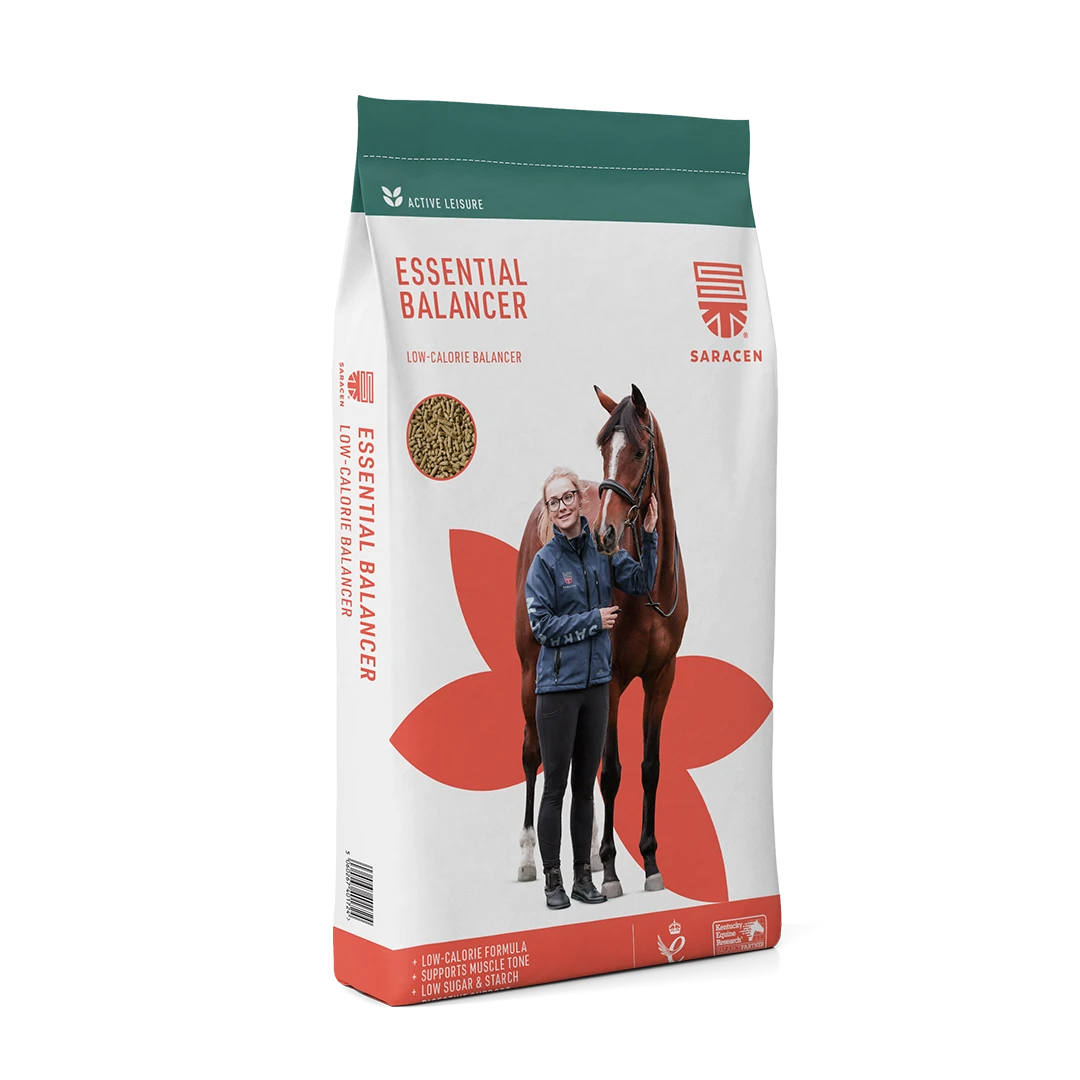
Once other factors have been considered, choosing the correct feed can help compliment the individual horse’s needs.
For horses that maintain weight easily, Essential Balancer provides a low calorie source of vitamins, minerals and essential amino acids to complement a forage-based diet, support muscle tone and topline, without adding unnecessary calories.
For horses needing additional calories, Condition Improver Mix provides a moderate energy option to support weight, condition and topline development.
For horses in more demanding work, Enduro Performance provides high oil, slow-release energy to support stamina and the demands of sustained exercise. Ensuring sufficient energy to help the horse meet his workload whilst supporting muscle maintenance and recovery.
For horses with limited access to good grazing or increased nutritional demands Nano-E provides a concentrated source of natural vitamin E, a powerful antioxidant which is useful when additional supplementation alongside the existing diet is required.
The best results with all feed comes from combining a suitable exercise program and adequate recovery with a balanced diet tailored to the individual horse. If you would like some advice on products suitable for your horse please ring the nutrition helpline on (+44) 1622 718487.
Need Guidance?
If you would like any further information on feeding your horse or pony please feel free to contact our nutritional team on +44 (0)1622 718 487, email info@saracenhorsefeeds.co.uk or fill out our Feed Advice Form.